Fuel Prices: Is Driving Farther for Scrap Still Worth It?
Market notes · Published
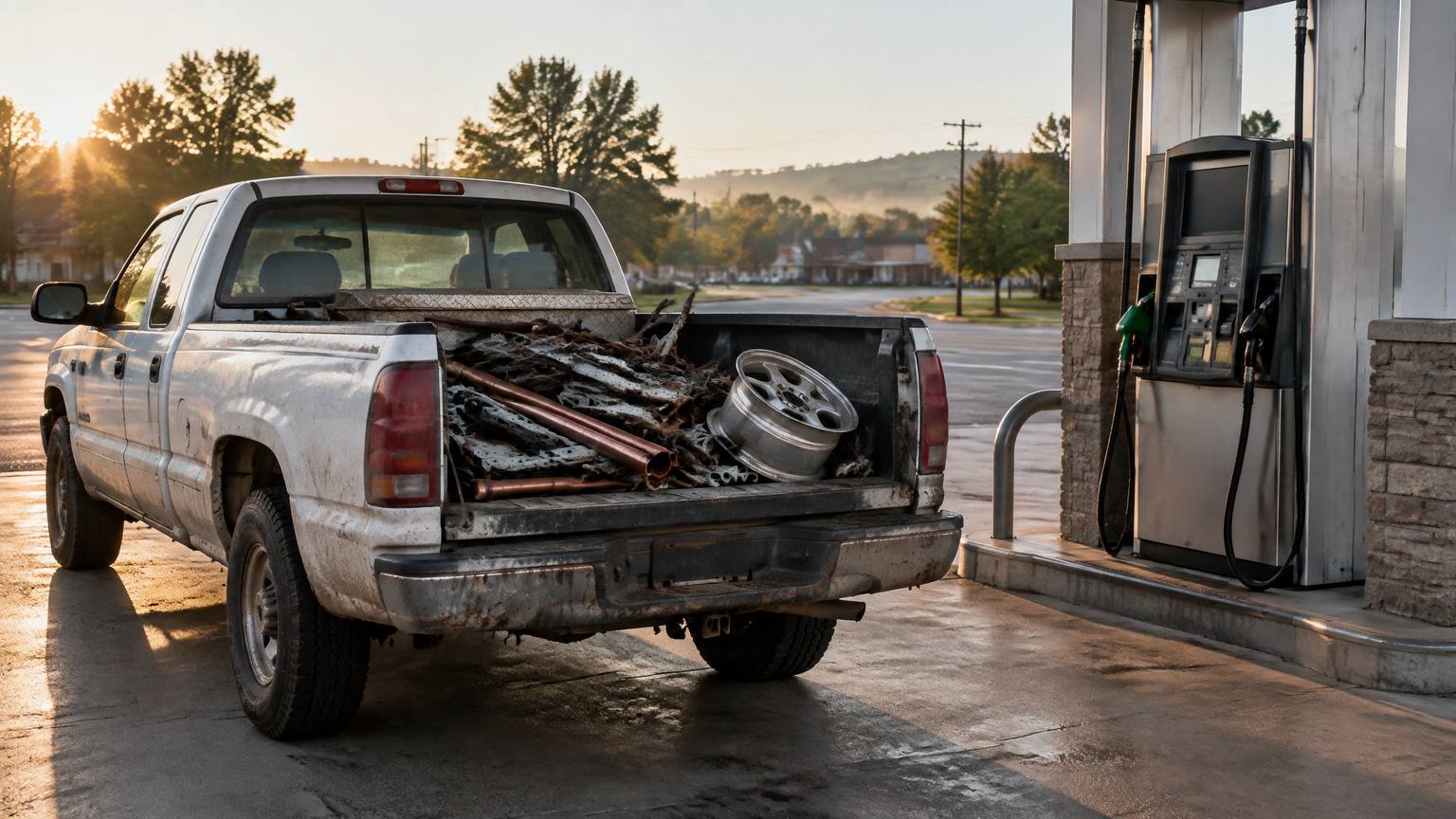
Fuel prices are the news this week, and a hauler feels both kinds. U.S. diesel averaged $6.199 a gallon on October 5, 2026, up $2.488 in a year, and regular gasoline $4.354, up $1.230, according to the U.S. Energy Information Administration (EIA). If your best yard is 30 miles farther than the closest one, that drive costs far more than last fall. This post shows the math for deciding if it still pays.
Every price here has its source and date. Fuel prices change every week, so read these as one week's numbers.
The short version
- U.S. diesel averaged $6.199 a gallon on October 5, 2026, against $3.711 a year earlier (EIA).
- U.S. regular gasoline averaged $4.354 a gallon, against $3.124 a year earlier (EIA).
- A 40-mile round trip in a truck that gets 12 miles per gallon costs about $21 in diesel or about $15 in gasoline now, against about $12 and $10 a year ago.
- A far yard has to pay enough extra to cover the extra miles. At current fuel prices the bar is higher than it was last fall. The formula is below.
Get the app
Free to start · scans included · no card needed
What fuel prices did this year

The EIA publishes a weekly average for U.S. on-highway diesel. It was $3.711 a gallon on October 6, 2025, and $3.477 on January 5, 2026. The week of March 2 it was $3.897. A week later it was $4.859, a jump of $0.962 in seven days. It reached $6.529 on September 21, the highest weekly figure of 2026, then fell two weeks in a row, to $6.382 on September 28 and $6.199 on October 5, according to the EIA weekly diesel history.
Regular gasoline had the same shape with a smaller swing. The EIA weekly gasoline history has it at $3.124 on October 6, 2025, and $2.796 on January 5, 2026. It was $3.015 on March 2 and $3.502 a week later, a jump of $0.487. Its 2026 high was $4.500 on May 11. It was $4.465 on September 28 and $4.354 on October 5.
We found no source on the approved list that explains the March jump, so this post does not guess at the cause. What the data does show is simple: the same drive costs far more than it did a year ago, in either fuel.
How to work out what a drive costs
Cost per mile is the price of a gallon divided by your miles per gallon. A round trip costs the round-trip miles times the cost per mile. The table uses 12 miles per gallon for both fuels as an example, not as a promise, so the only thing that changes between rows is the price. Your truck's number will differ.
| Fuel and date (U.S. avg) | Price a gallon | 20 miles | 40 miles | 80 miles |
|---|---|---|---|---|
| Diesel, Oct 6, 2025 | $3.711 | $6.19 | $12.37 | $24.74 |
| Diesel, Oct 5, 2026 | $6.199 | $10.33 | $20.66 | $41.33 |
| Gasoline, Oct 6, 2025 | $3.124 | $5.21 | $10.41 | $20.83 |
| Gasoline, Oct 5, 2026 | $4.354 | $7.26 | $14.51 | $29.03 |
Same truck, same trip, about 67 percent more in diesel and about 39 percent more in gasoline. The arithmetic is ours. The prices are the EIA's.
Scrap tip: Find your own miles per gallon. Fill the tank, reset the trip meter, and after a normal week of hauling divide the miles driven by the gallons you added. That number goes into the formula, not a guess from a brochure.
Fuel prices in New York
New York sits in what the EIA calls the Central Atlantic region. Diesel there was $6.485 a gallon on October 5, which makes the 40-mile trip about $21.62. New England was $6.476, in the EIA's gasoline and diesel fuel update.
Regular gasoline was $4.380 in New York State and $4.340 in New York City that week. At 12 miles per gallon, the same 40 miles costs about $14.60 on the State average. These are regional, state and city averages, not the price at your pump.
The break-even for a far yard

The extra miles to the far yard cost money, and the far yard has to pay that money back at this week's fuel prices, not last year's. Divide the extra pay by your cost per mile. The answer is how many extra round-trip miles you can afford before the closer yard wins.
Take an example haul where the far yard pays $50 more. This is an example, not a posted price. At $6.199 diesel and 12 miles per gallon, a mile costs about $0.52 and the break-even is about 97 extra round-trip miles. At $4.354 gasoline, a mile costs about $0.36 and the break-even is about 138 miles. A year ago the same $50 covered about 162 miles on diesel and about 192 on gasoline.
When the far yard barely pays more
Take a smaller gap, again as an example. The far yard pays $20 more and sits 30 miles farther each way, so 60 extra round-trip miles. On diesel those miles cost about $31, and the closer yard comes out about $11 ahead even though its posted price is lower. On gasoline they cost about $22, so the closer yard still comes out about $2 ahead.
Scrap tip: Fill the bed before a long run. The drive costs what it costs, so a full bed spreads it over more pounds. A half-empty truck to the far yard is the version that loses.
The math leaves out your time, tolls and wear on the truck. If you count those, the closer yard looks better. We do not put a number on them because they are yours.
Steel is the metal where this bites hardest. It pays little per pound, so the drive takes a bigger share of the check than it does with copper. Copper pays more per pound, so a longer drive can make sense for a pile of it, and how yards grade copper shows which grade you have.
Related reading: Steel pays so little per pound that the trip counts. A steel headline does not change the board at your yard, and the board is what you drive for. Why steel prices are up while scrap steel prices are not shows how to read it before you pick where to go.
What to do before you drive

Four steps take a few minutes:
- Get each yard's posted price for your grade, with the date.
- Work out the extra round-trip miles to the farther yard.
- Multiply those miles by your cost per mile at this week's fuel prices for your own fuel.
- Compare that number with the extra pay.
The scrap rates page lists posted yard prices. Scraplift ranks yards near you after fuel costs.
What to watch next
The EIA updates its diesel and gasoline prices every week, and its next release is October 14. Check the week's number before a long haul, because the break-even moves with it. When fuel prices fall, the far yard gets easier to justify. When they rise, the close yard wins more often.
We found no public source that says how yard prices respond when fuel prices move, so we make no claim about it. A yard sets its own price. The fuel is your cost.