Scrap Copper Prices Per Pound: The 5 Grades Yards Use
Metal guides · Published
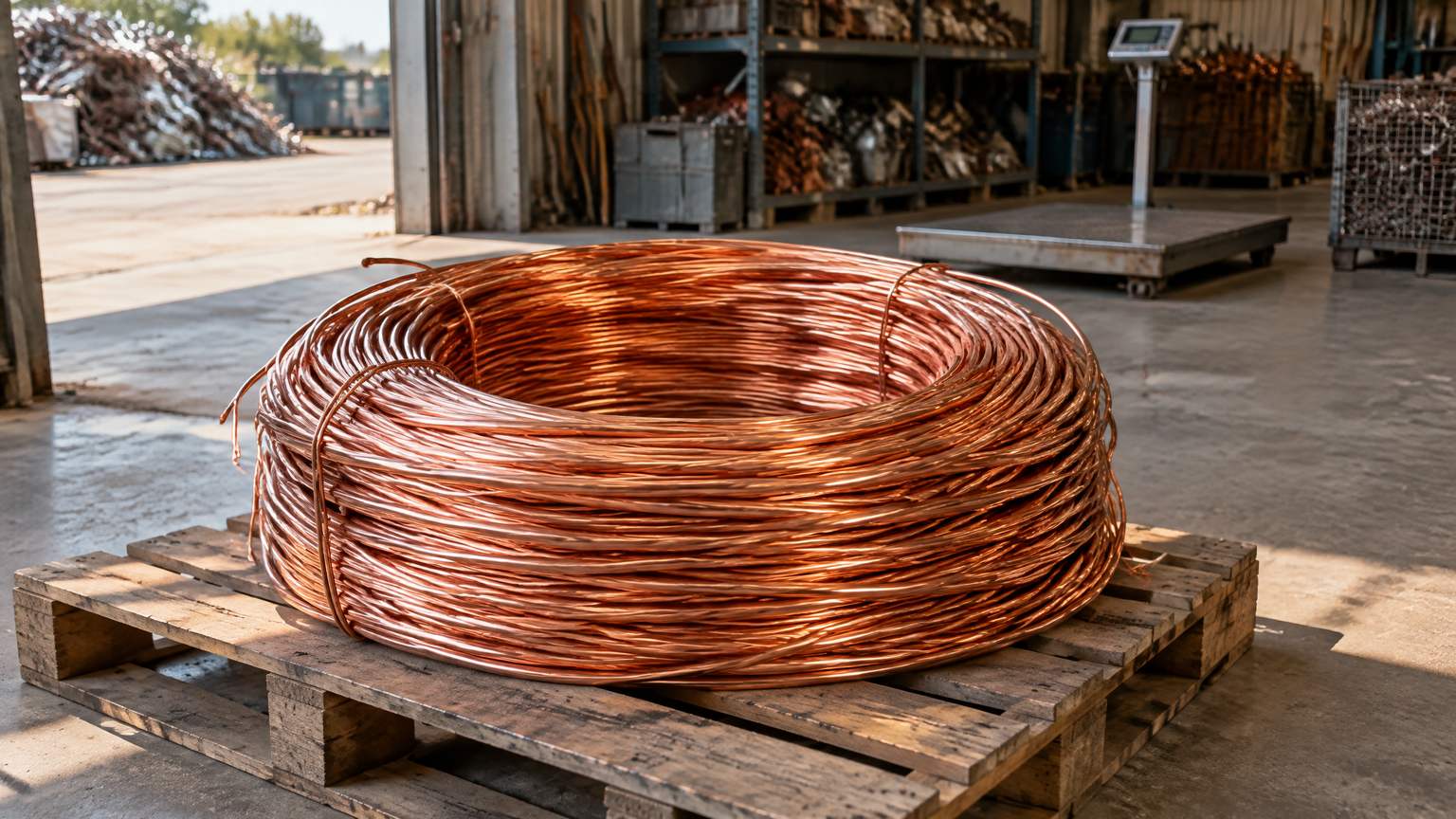
Scrap copper prices per pound are not one number. A yard pays by grade, and the same pound of copper can land in very different lines. This guide explains the grades, what pulls a grade down, and how to check a quote before you sell.
Every number has its source and date. The July and August 2026 figures are preliminary and can change.
The short version
- Copper-base scrap prices rose about 43 percent from August 2025 to August 2026.
- Yards price by grade. This guide covers the five grades in the trade's written standard.
- Ask for the grade, the date and the unit before you sell.
Get the app
Free to start · scans included · no card needed
What scrap copper prices did
The U.S. Bureau of Labor Statistics publishes a price index for copper-base scrap. It was 993.347 in August 2026 and 694.679 in August 2025, up about 43 percent. It is up about 12 percent from April (887.127).
The U.S. Geological Survey gives the longer view. Its 2026 chapter on copper says the Comex price was projected to average a record $4.80 a pound in 2025, 14 percent above $4.22 in 2024. Analysts put most of the rise down to uncertainty about tariffs on copper imports. The chapter also says recycled copper supplied about 30 percent of U.S. copper supply. Scrap is a big part of the market.
Where the tariffs stand
The tariffs are one reason copper is in the news. A White House proclamation of July 30, 2025 set a 50 percent tariff on semi-finished copper products and copper-intensive derivative products from August 1, 2025. It did not put a tariff on refined copper, copper cathodes or scrap.
It asked the Commerce Secretary for an update by June 30, 2026 on a phased tariff on refined copper. The Secretary had recommended 15 percent from 2027 and 30 percent from 2028. The President decides after that update. We did not find a final decision in the sources we read.
The Geological Survey's tariff table, dated December 31, 2025, lists copper scrap as duty free.
Five copper grades in plain words
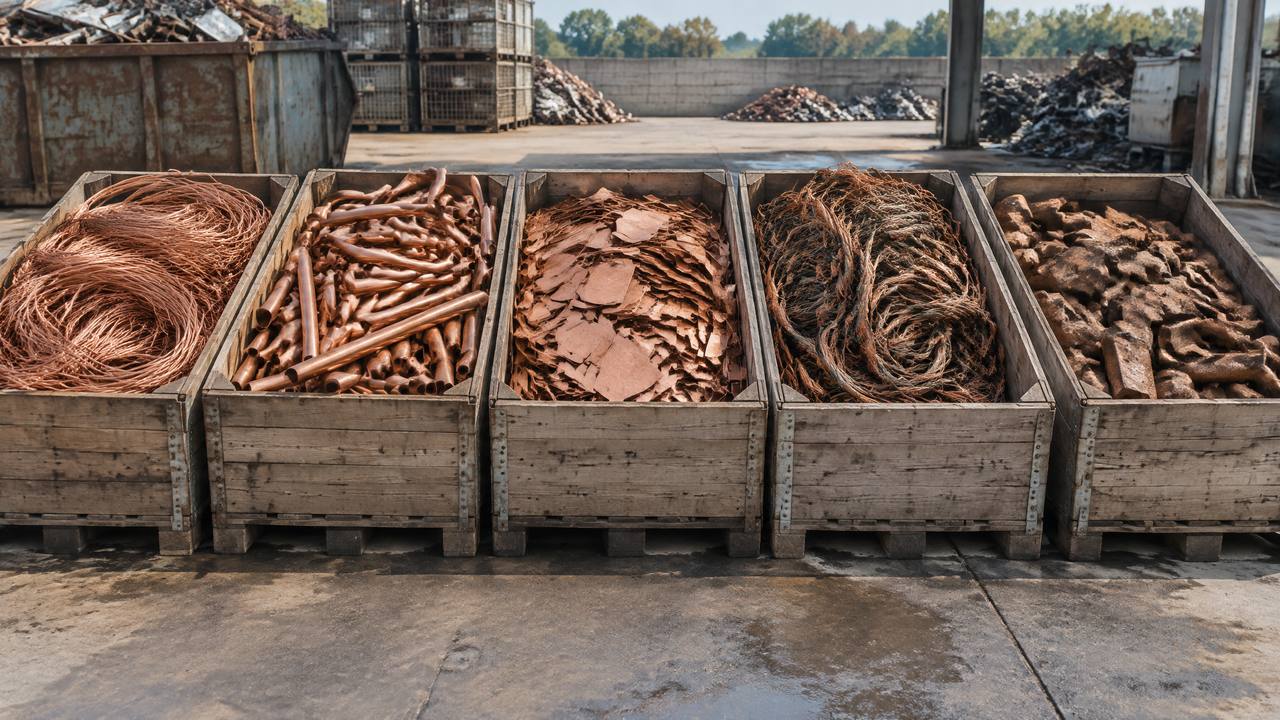
The Recycled Materials Association (ReMA, formerly ISRI) is the trade's official body. Its Scrap Specifications Circular gives each grade a written definition, so buyers and sellers mean the same thing. ReMA describes the circular as internationally recognized guidelines for buyers and sellers of recycled materials.
The full document is on ReMA's specifications site, isrispecs.org, which lists a July 2026 edition. The wording below comes from the 2017 edition, so check the current one before you rely on a detail.
| Code | Line | What it is |
|---|---|---|
| Barley | No. 1 wire | Bare, uncoated, unalloyed copper wire, known as bare bright |
| Berry | No. 1 wire | Clean, untinned, uncoated, unalloyed wire and cable, free of brittle burnt wire and of tubing |
| Birch | No. 2 wire | Mixed unalloyed wire, nominal 96 percent copper, 94 percent minimum |
| Candy | No. 1 heavy | Clean clippings, punchings, bus bars, commutator segments and clean tubing |
| Cliff | No. 2 solids | Mixed unalloyed copper, nominal 96 percent copper, 94 percent minimum |
Number 1 means clean, bare and close to pure. Number 2 allows more mixed material.
Insulated wire is a separate line. The circular says it is sold on a sample or recovery basis, by agreement between buyer and seller.
Scrap tip: Ask your yard which of its lines your copper falls in before you haul it in. The five lines above are the standard way to describe it, and a yard that uses them will tell you which one it is pricing for you.
What pulls a grade down
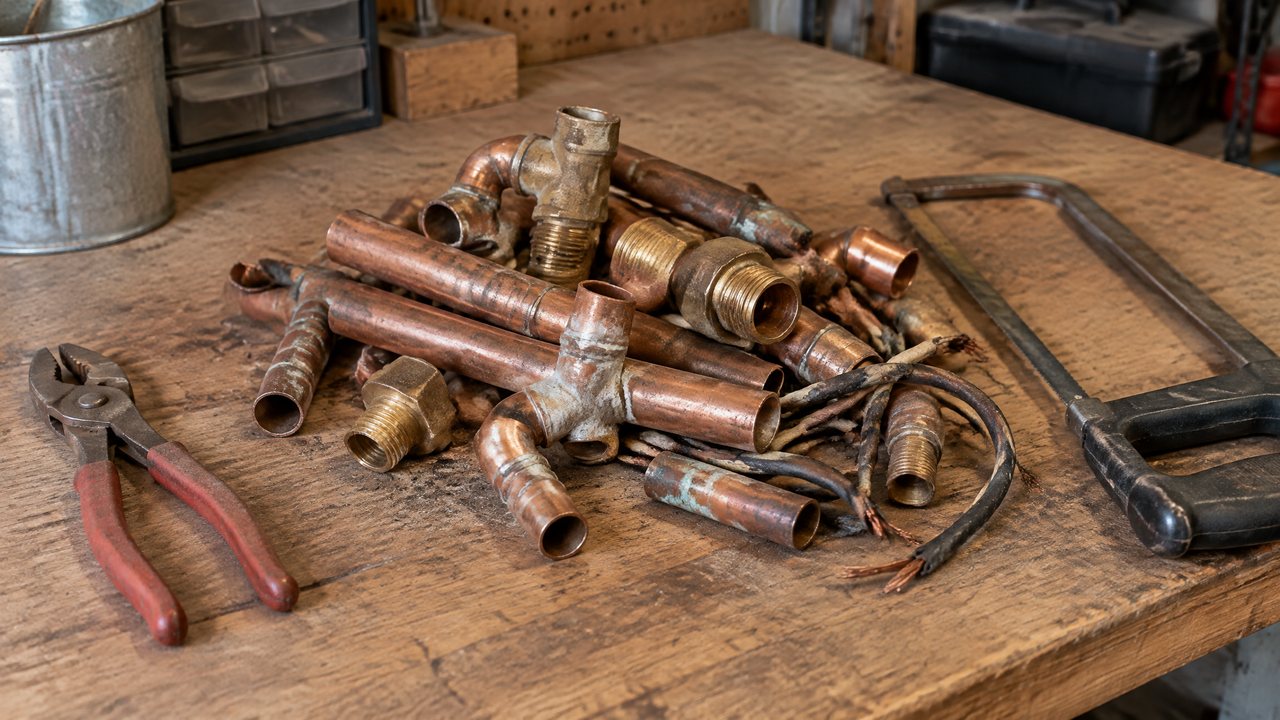
The circular also lists what No. 2 wire and No. 2 solids should be free of:
- excessively leaded, tinned or soldered copper
- brass and bronze
- excess oil, iron and non-metallic material
- copper wire from burning, and brittle burnt wire
- insulation and hair wire
- ash (the material should be reasonably free of it)
For No. 2 solids it adds copper tubing with other than copper connections, or with sediment. A pile with solder, brass fittings or insulation on it can fall to a lower line, or be sold on recovery.
Scrap tip: Pull off brass fittings and solder joints before you bring copper in. The circular lists them among the things No. 2 copper should be free of, so every one you leave on gives the buyer a reason to grade the pile lower.
Why two quotes for scrap copper prices differ
You can see two prices for copper and both can be right. The usual reasons are the grade, the date and the unit. A bare bright price and a No. 2 price are different lines. Boards change, so last week's price is not this week's. A price per pound is not a price per ton.
A yard's own posted sheet is the whole truth for that yard. A grade it does not list is simply not on its board. When you compare yards, compare the same grade in the same week.
Related reading: Steel has its own government price indexes, one for the mills and one for scrap, and since April they have moved in different directions. Steel prices are up, but scrap steel prices are not shows how to read the two side by side before you trust a headline.
How to check a quote
When you check scrap copper prices before you sell, ask three things:
- Which grade is this price for? Ask for the name the yard uses and what it means.
- What date is the price from?
- Is it per pound or per ton? Write each answer next to the price so you can compare it later.
If a yard will not name the grade, treat the price as unconfirmed. A number with no grade attached is hard to compare with anything.
Keep the weigh ticket. It records the weight and the grade that were paid, which is useful in your own earnings log. The scrap rates page lists posted yard prices, and Scraplift helps you scan an item, name the metal and see yard prices near you.
Scrap copper prices keep moving
The tariff question is not settled, and prices move every month. Grades do not. A clean, bare copper wire is a No. 1 line whether the market is high or low. Learn the grades once and scrap copper prices become easier to read, whatever comes next.