Steel Prices Are Up 23%, but Scrap Steel Prices Are Not
Market notes · Published
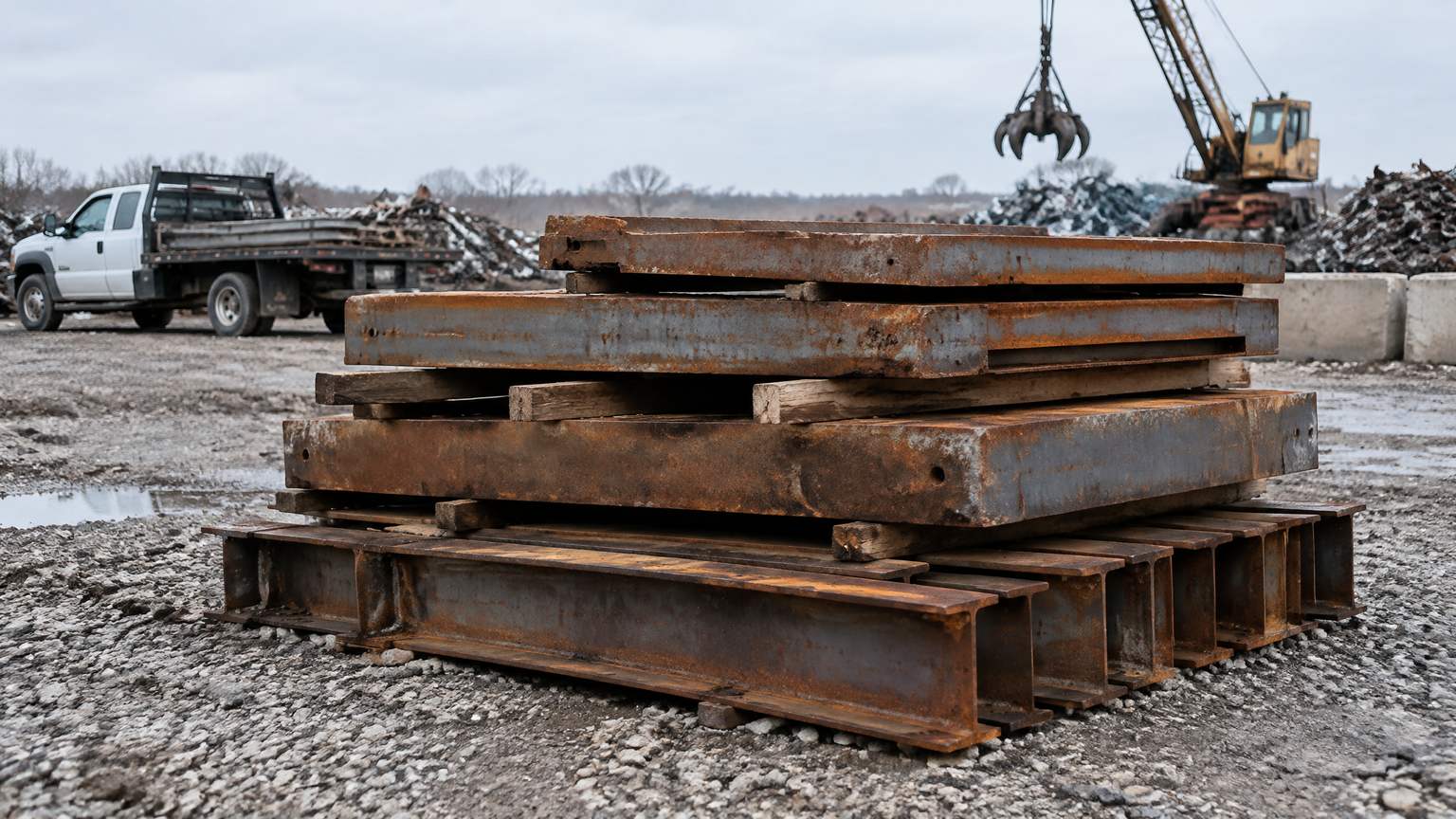
Steel prices are up about 23 percent in a year. Scrap steel is not following. If you haul steel, that gap matters more than the headline. This post shows what the government data says and how to read a yard board.
Every number has its source and date. The July and August 2026 figures are preliminary and can change.
The short version
- Steel prices at the mills rose about 12 percent from April to August 2026.
- Scrap steel prices fell about 3 percent over the same months.
- Your yard sets its own price. A steel headline does not change it.
Get the app
Free to start · scans included · no card needed
What steel prices at the mill did
The U.S. Bureau of Labor Statistics tracks what mills charge in its producer price index for steel mill products. The index was 381.162 in August 2026 and 308.772 in August 2025. That is up about 23 percent in a year.
Imports are part of the story. Since June 4, 2025, most imported steel articles have carried a 50 percent tariff under Section 232, according to the White House proclamation of June 3, 2025. That makes imported steel cost more. We found no source that says how much of the rise comes from the tariff, so we do not guess.
How to read an index number
These steel prices are index numbers, not dollars a ton. The agency sets the average price level in 1982 at 100 and reports each month against that base. A reading of 381 means prices are about 3.8 times the 1982 level. What matters here is the direction and the size of the change, not the number itself.
What scrap steel did
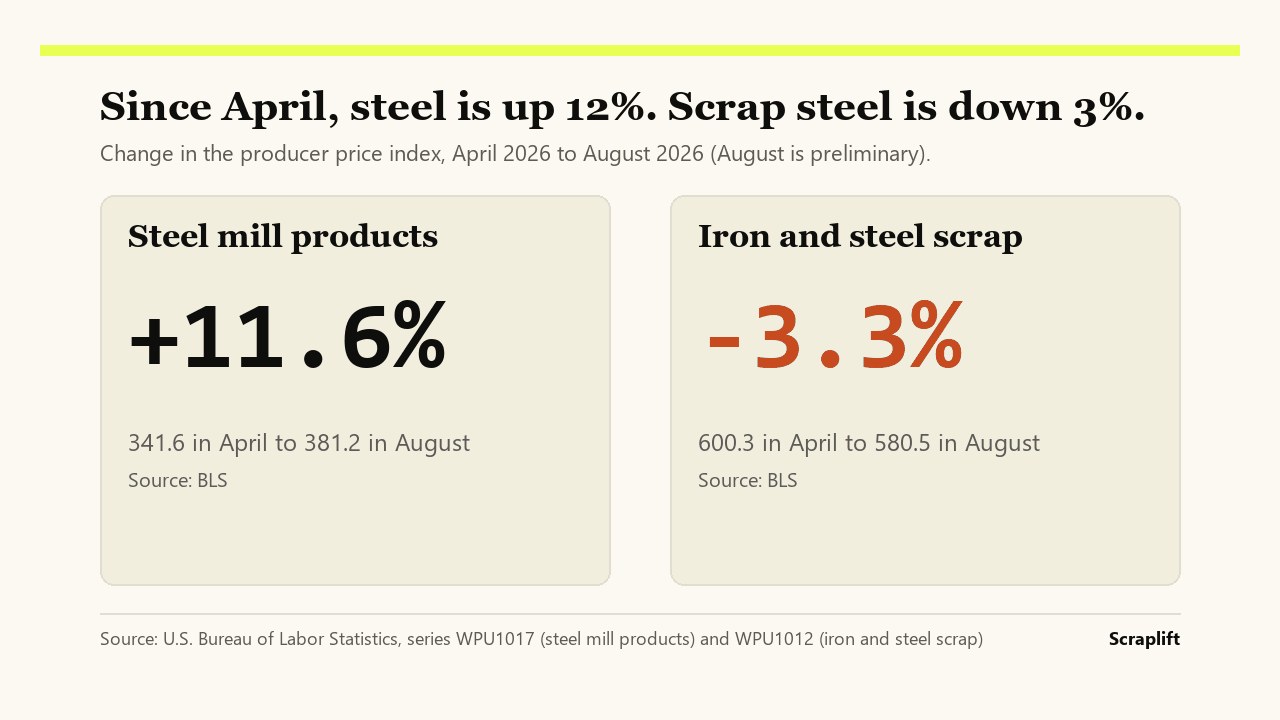
The same agency publishes a price index for iron and steel scrap. It peaked at 614.795 in March 2026. By August it was 580.548, about 6 percent lower than the peak and about 3 percent lower than April. It is still about 9 percent above August 2025.
| Index | Aug 2025 | Apr 2026 | Aug 2026 (preliminary) | Since April | In a year |
|---|---|---|---|---|---|
| Steel mill products | 308.8 | 341.6 | 381.2 | +11.6% | +23.4% |
| Iron and steel scrap | 530.3 | 600.3 | 580.5 | -3.3% | +9.5% |
The agency revises each month's number for up to four months, so the preliminary figures can move.
Why the two can split
The two indexes measure different things. One shows steel prices at the mill for new steel. The other shows what scrap steel sells for. Nothing says they must move together, and since April they have not.
We found no source that explains the split, so this post does not guess at the cause. What the data does show is simple: since April, steel rose and scrap did not.
Scrap tip: Write the date and the grade next to any price you are quoted. A price with no date and no grade cannot be compared with the next one, and over a few weeks your notes show which way your yard is moving.
A year of context from the U.S. Geological Survey
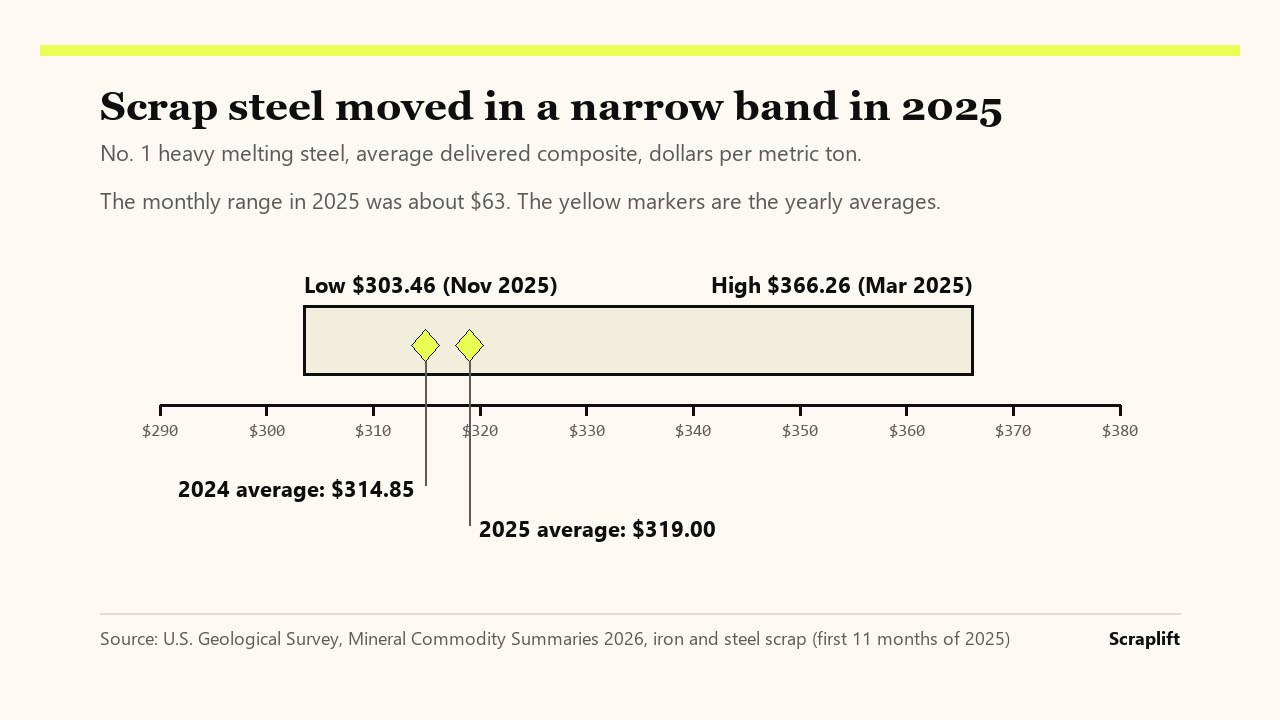
The Geological Survey publishes a yearly summary. Its 2026 chapter on iron and steel scrap tracks No. 1 heavy melting steel as its price series. For 2025 it reports:
- An average delivered price of an estimated $319 per metric ton, against $314.85 in 2024.
- A monthly range, over the first 11 months, from a high of $366.26 in March to a low of $303.46 in November. That is a spread of about $63.
- Apparent consumption of scrap of about 57 million tons, up from 55 million.
- Raw steel production of about 82 million tons, up from 79.5 million.
- Mills running at 75 to 80 percent of capacity in the first ten months, against 72 to 78 percent in 2024.
The composite is what mills pay delivered. What a hauler is paid at a yard is a separate number, set by the yard.
Where the steel in your truck ends up

The same chapter says the scrap recycling rate has averaged between 80 and 90 percent over the past decade. Cars are the main source of old steel scrap: more than 13 million tons a year, the equivalent of about 17 million vehicles, through more than 280 car shredders in North America.
It estimates the recycling rate at 78 percent for appliances and 97 percent for structural steel from construction, and says rates change from year to year. The appliances and cars that haulers collect are a real part of the supply.
Related reading: Copper is sold by grade at the yard, the same way steel is. How yards grade copper, from bare bright to number 2 explains the five written grades and shows what pulls a pile down a line at the yard.
Reading the units
Sources quote scrap in different units, and that is where many mix-ups start. A short ton is 2,000 pounds. A gross ton is 2,240 pounds. A metric ton is about 2,205 pounds.
To show the math, $319 per metric ton works out to about 14.5 cents a pound. That is arithmetic, not a yard price. A yard's own posted sheet is the whole truth for that yard.
What to do with a haul of steel
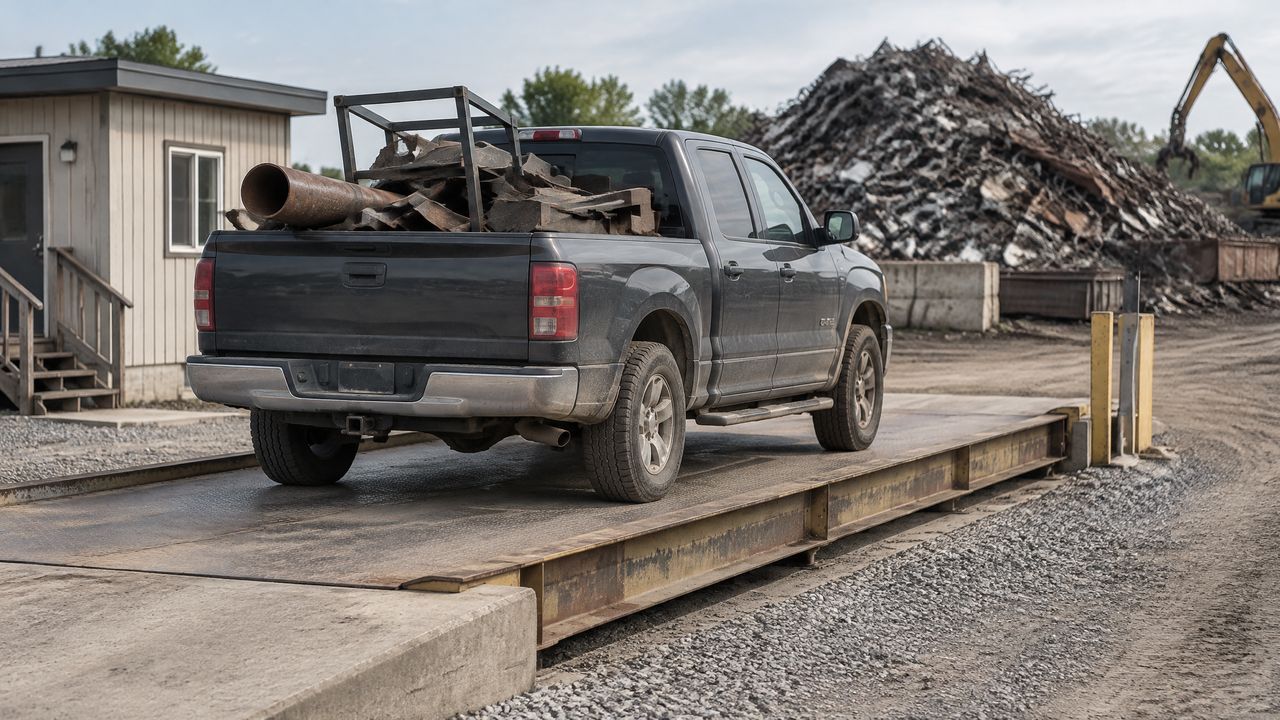
A headline about steel prices does not change the board at your yard. Four questions help you read it:
- Which grade is the price for? Heavy steel, busheling and shredded are different lines.
- What is the date of the price?
- Is it per pound or per gross ton?
- Are you comparing the same grade in the same week?
Steel is heavy and pays little per pound next to metals like copper, so the trip counts. The scrap rates page lists posted yard prices. Scraplift shows yards near you with what a haul nets after fuel costs.
Scrap tip: Steel pays little per pound, so fuel costs can cancel a better board price on a long drive. Compare two yards after fuel costs, not before, and pick the one that leaves more in your pocket.
What to watch next
Watch two things: steel prices at the mills, and whether scrap follows them. The next producer price numbers will also revise July and August.
We found no public source that measures how fast yard boards react to scrap markets in New York, so we will not claim a lag.