Scrap Week Ahead: Remodel Season
Market notes · Published
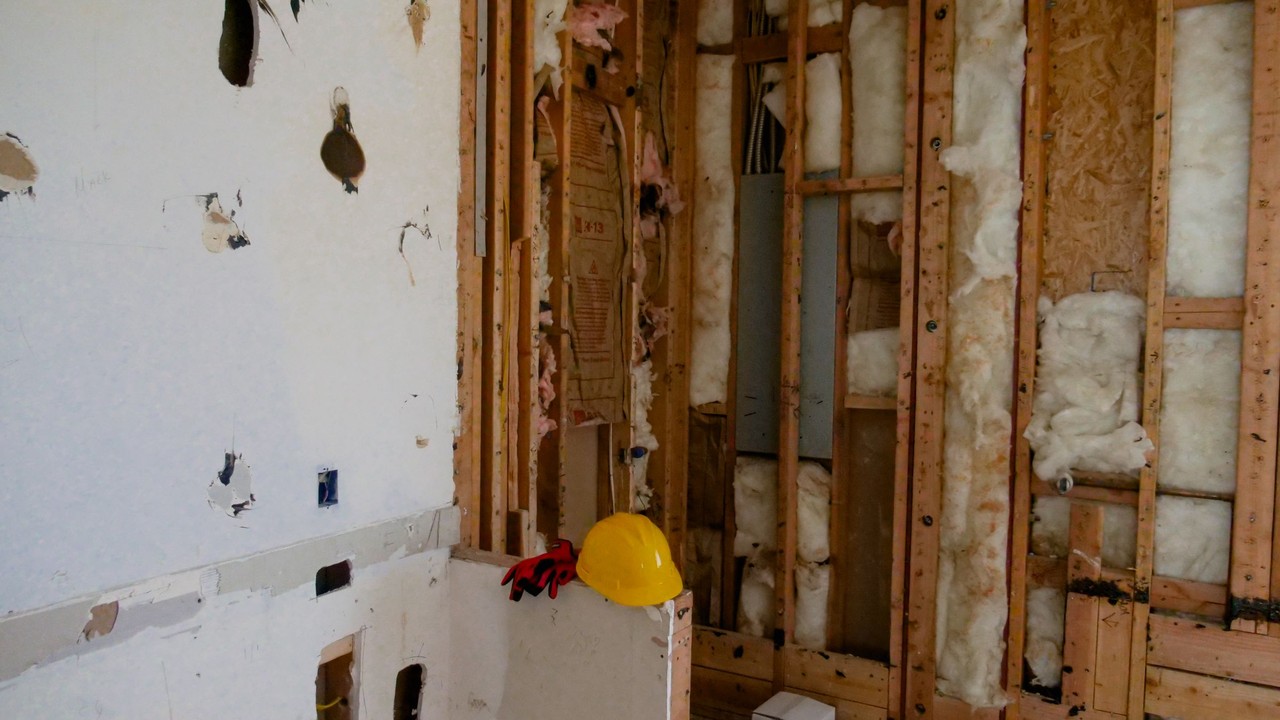
Remodeling scrap leads the scrap week ahead for November 9 to 13, 2026. Home remodeling spending is holding near $525 billion a year, and that steady stream of old pipe, wire, fixtures and window frames is work a small hauler can count on. This issue also covers Friday's producer prices, which carry the government's scrap price indexes, and a battery safety session for recyclers in New York on Thursday. Every date and figure names its source, and nothing here is a forecast of your yard's board.
The week in four lines
Four dated events matter this week, and the card below puts them on one page.
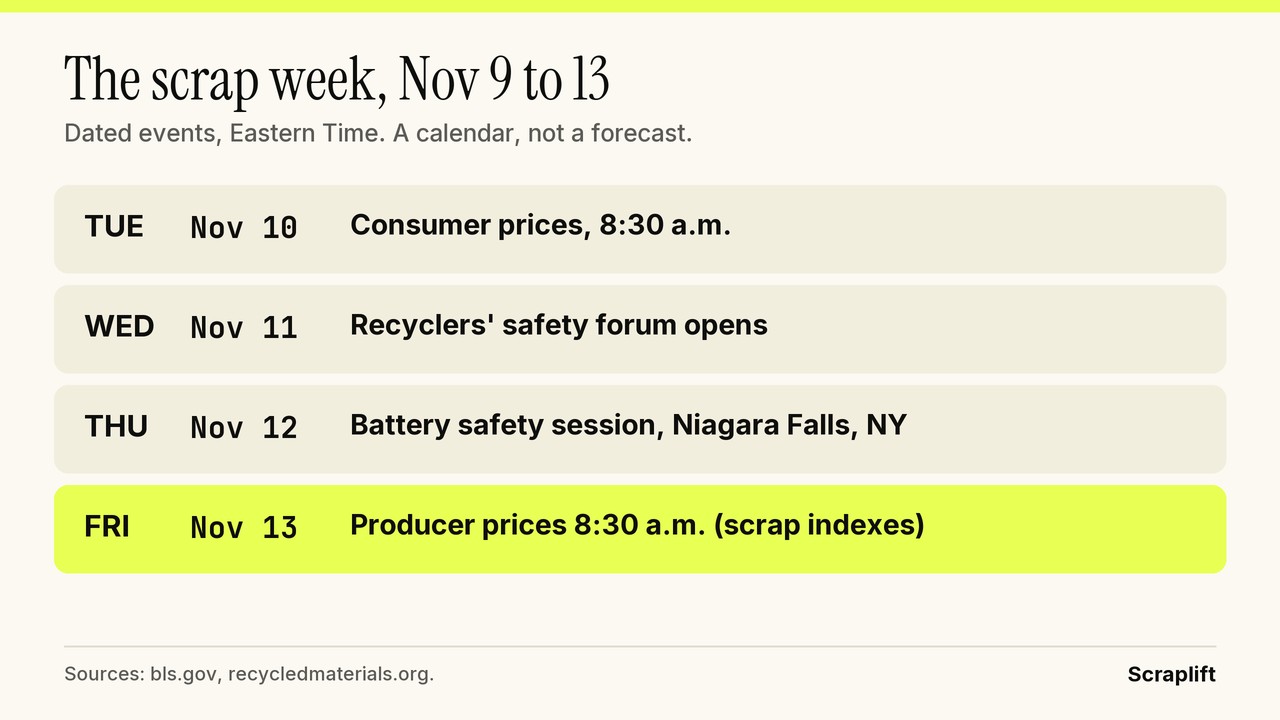
Here is the same week in words, with times in Eastern Time as each source lists them:
- Tuesday, November 10: consumer prices for October at 8:30 a.m.
- Wednesday, November 11: the recyclers' Safety and Operations Forum opens.
- Thursday, November 12: a battery safety session at a recyclers' event in Niagara Falls, New York.
- Friday, November 13: producer prices for October at 8:30 a.m., the release with the scrap price indexes.
Get the app
Free.
Remodeling scrap holds steady
Recycling Today reported on November 8 that Harvard's Joint Center for Housing Studies puts American home remodeling spending at about $525 billion this year. That is in line with the more than $500 billion spent in each of the past two years.
The center calls the spending "relatively flat." Its program director expects annual spending "to hover around $525 billion through the third quarter of next year." Year over year growth in renovation and repair spending was expected to reach just 1.5 percent by the end of this year's third quarter.
Flat sounds dull, but for remodeling scrap, flat is good news you can plan around. A market that holds near $525 billion is a market that keeps tearing out old kitchens, bathrooms and basements week after week. That is the steady work, not the boom.
Why homeowners are fixing instead of moving
The same report gives one reason. A lender quoted in it says many homeowners would rather borrow against the house they have than take on a new mortgage, and it cites the Federal Reserve Bank of New York: home equity line of credit balances have risen for 17 straight quarters, to a record $459 billion in the third quarter.
One remodeler in Maine told Recycling Today his company has "tripled in the number of jobs and in the size of jobs," and he named more additions and basement jobs. That is one firm in one region, so read it as a sign of where the work is, not as a national number.
Our reading: when people stay put and fix up, the remodeling scrap comes out of the house a room at a time. That favors a hauler with a pickup over a big contractor with a roll off.
What remodeling scrap is worth sorting

The article cites a Florida yard's list of remodeling scrap with value, and it reads like a hauler's checklist:
- Copper: wiring and plumbing pipe.
- Brass: plumbing fixtures and old door knobs.
- Aluminum: window frames and siding.
- Steel and stainless: kitchen steel and stainless.
Each of those is priced apart, and a mixed bucket usually gets paid at the lowest grade in it. Remodeling scrap comes out mixed, so the money is in the sorting.
Scrap tip: Keep four buckets on the truck for remodeling scrap: copper, brass, aluminum and steel. Cut the steel screws and plastic off brass fixtures and aluminum window frames before you go. Clean metal sells at the better grade, and it takes minutes at the curb.
Where to find remodeling scrap

The work is spread across many small jobs, so the trick is to be the hauler they call. Small remodelers, plumbers and handymen pull out more copper and brass than they have time to deal with. A bathroom gut can mean a sink, a tub drain, supply lines and a box of fittings, and the crew wants the room clear by Friday.
A steady arrangement with two or three small crews can be worth more than one big cleanout. Leave your number, show up when you say you will, and take the metal along with the job.
How remodeling scrap differs from a cleanout
A cleanout is one big haul of whatever a house has collected over years. Remodeling scrap is different. It comes from one room at a time, it is mostly the same few metals, and it comes back every time the crew starts a new job. A kitchen gives you a sink, supply lines, a range hood and maybe an old range. A bathroom gives you copper pipe, brass valves and a tub drain. A window job gives you aluminum frames by the dozen.
That makes remodeling scrap easier to sort and easier to plan around. You know roughly what is coming before you get there, so you can bring the right buckets and leave room in the bed. It also means less junk mixed in with the metal, which saves time at the scale.
Related reading: A clear note on every sale makes a steady supply worth more. Scrap tips: write it down before you sell covers the five things to note on a quote, so remodeling scrap from regular crews adds up to numbers you can check.
Friday: producer prices and the scrap indexes

On Friday, November 13, at 8:30 a.m., the Bureau of Labor Statistics releases the producer price index for October, per its November schedule. This is the release that carries the government's scrap price indexes for iron and steel, copper and aluminum.
For a sense of what it says, look at September's report from October 15. Producer prices for final demand rose 1.3 percent that month, seasonally adjusted, and 6.3 percent over 12 months. Among the decreases, BLS named aluminum base scrap, per its release.
The scrap indexes are a national figure for the month. They tell you the direction metal took, not what your yard pays this week. Use them like a weather report for the season, and use the posted board for the price.
How to read Friday's numbers
Look at the change from the month before, not the size of the number itself. The indexes are measured against a base year, so the raw value means little on its own. What matters is whether iron and steel scrap, copper scrap and aluminum scrap went up, down or held, and whether all three moved the same way.
A month where steel rises and aluminum falls tells you to watch your grades one by one, not to expect one move across the board. And because the index looks back at October, your yard may already have moved its board before the report comes out.
Related reading: Last week's recap followed steel scrap into the November buying round. Our scrap week recap for November 2 to 6 has the mill numbers to compare with Friday's iron and steel scrap index.
Thursday: batteries and a safety session in New York

The Recycled Materials Association's Empire Chapter meets on Thursday, November 12, at the Seneca Niagara Resort in Niagara Falls, New York, per the event page. New this year is a session from 4:30 to 6:00 p.m. called "Powering Up Safety: Managing Battery Risks in Recycling." It covers how small and large batteries are changing the risks at recycling sites, including electric vehicle and hybrid batteries.
Separately, the association runs its national Safety and Operations Forum outside New York from November 11 to 13, on shredder operation, maintenance and emergency response.
Batteries matter to a hauler for a plain reason. Remodeling scrap and cleanouts are full of cordless tools, smoke detectors, chargers and small electronics, and lithium-ion batteries can start fires. The Environmental Protection Agency says these batteries "can cause fires during transport or at landfills and recyclers," per its battery FAQ.
A damaged battery needs even more care. If a battery is damaged, the EPA says to contact the battery or device maker for handling information, per its battery guidance. So leave a cracked or swollen battery with the owner rather than putting it in your truck.
Scrap tip: Pull batteries out of tools and electronics before metal goes in the truck bed. The EPA says to tape the terminals or bag each battery and take them to a battery drop off or household hazardous waste site. Ask your yard what it accepts, and never bury a battery in a pile.
What it means for your week
Remodeling is not booming, and it is not going anywhere either. That makes remodeling scrap one of the steadier sources a small hauler has. Line up a few crews, sort as you go, keep batteries out of the bed, and read Friday's scrap indexes for direction, not for your price.
On fuel, the U.S. diesel average was $6.292 a gallon for the week of November 2, down 6 cents, per the EIA. The week after brings import and export prices on November 17 and housing starts on November 18, and we will cover both next Monday.
Scrap tip: Before you take remodeling scrap from a job, ask what is coming out next week too. A crew that is gutting a kitchen today is often doing the bathroom next, and a quick text can turn one pickup into a regular route.
Between issues, the scrap rates page shows posted prices by ZIP code, and Scraplift ranks the yards near you by what you clear after the drive. Last week's scrap week ahead covered the export rules that were open for comment.
This is general market commentary, not financial advice and not a promise. Your yard's own posted price for your grade is what you are paid. Check the date and the grade on any quote before you agree to it.
Quick answers
How much is being spent on home remodeling in 2026?
About $525 billion, per Harvard's Joint Center for Housing Studies as reported by Recycling Today. The center calls it relatively flat.
What remodeling scrap is worth keeping?
Copper wiring and pipe, brass fixtures and door knobs, aluminum window frames and siding, and kitchen steel and stainless. Sort each metal apart.
When are the government scrap price indexes released?
With producer prices for October, on Friday, November 13, at 8:30 a.m. Eastern, per the Bureau of Labor Statistics.
Can I put lithium batteries in my scrap?
Keep them out. The EPA says to tape or bag them and take them to a battery drop off or household hazardous waste site.